Hermès Exotic Leathers: The Ultimate Expert Guide
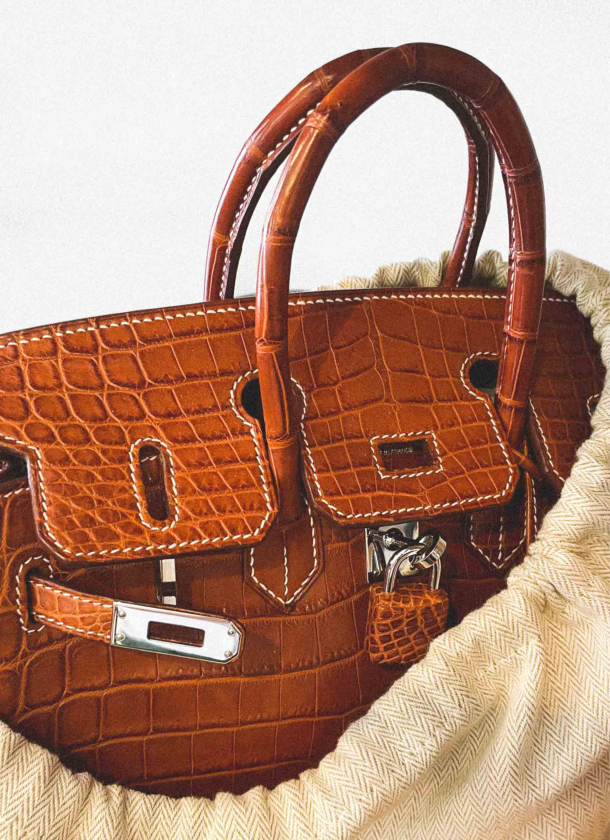
The only thing more coveted than a Hermès bag is a Hermès bag crafted in exotic leather. Handmade by artisans in the Hermès ateliers, each skin is meticulously selected and inspected to ensure only the most exceptional materials are used.
Whether you’re a collector or looking to invest in your first Hermès Exotic Bag, understanding the differences between Porosus, Niloticus, Alligator, Lizard, and Ostrich is essential. Here, our Luxury Bag Expert reveals everything you need to know before making your next precious purchase.
Porosus Crocodile
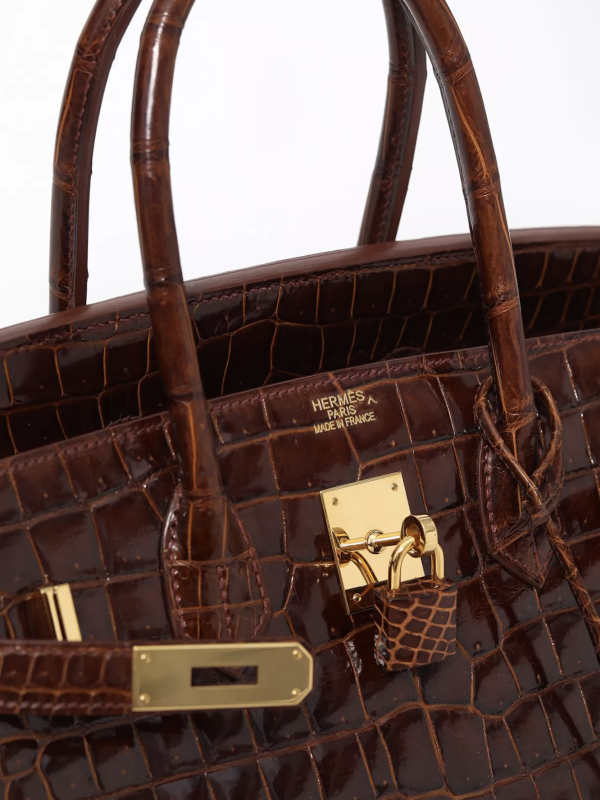
At the top of Hermès’s range of precious skins sits Porosus Crocodile, prized for its exceptional quality, rarity, and sheen.
Originating mainly from Australia, it is recognized by the tiny pores at the center of each scale and comes in two finishes: Matte or Lisse (Shiny). The glossy finish is achieved through meticulous agate stone polishing, while Matte versions are buffed by hand with wool felt.
Modern Hermès Porosus bags feature a small “^” caret symbol beside the brand stamp; older pieces without this mark can still be identified by the central pores unique to this leather.
Niloticus Crocodile
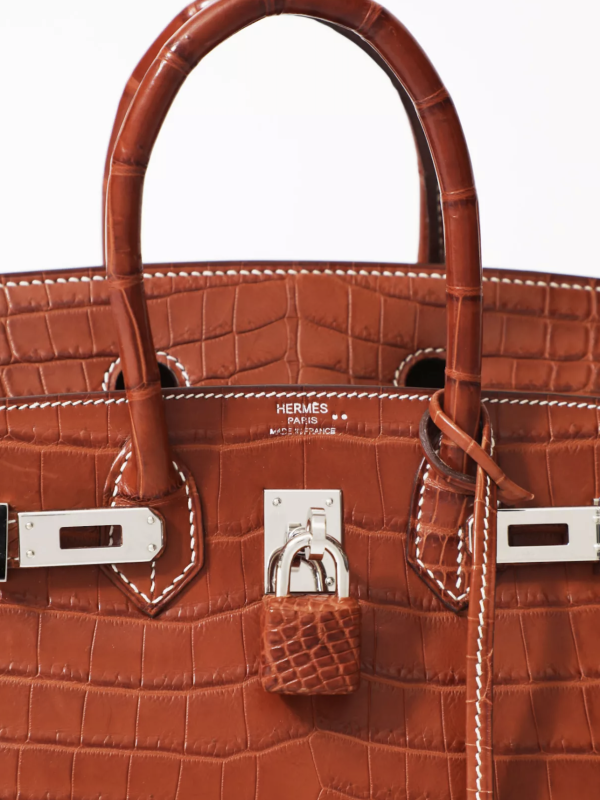
The Niloticus crocodile, native to the Nile River basin in Africa, is the second most coveted exotic skin used by Hermès.
Its scales are slightly larger and softer in texture than Porosus, and it is also available in Matte and Lisse finishes.
You can recognize a Niloticus piece by its “..” diaeresis mark next to the Hermès stamp. This skin offers a refined, natural look that develops a beautiful patina over time.
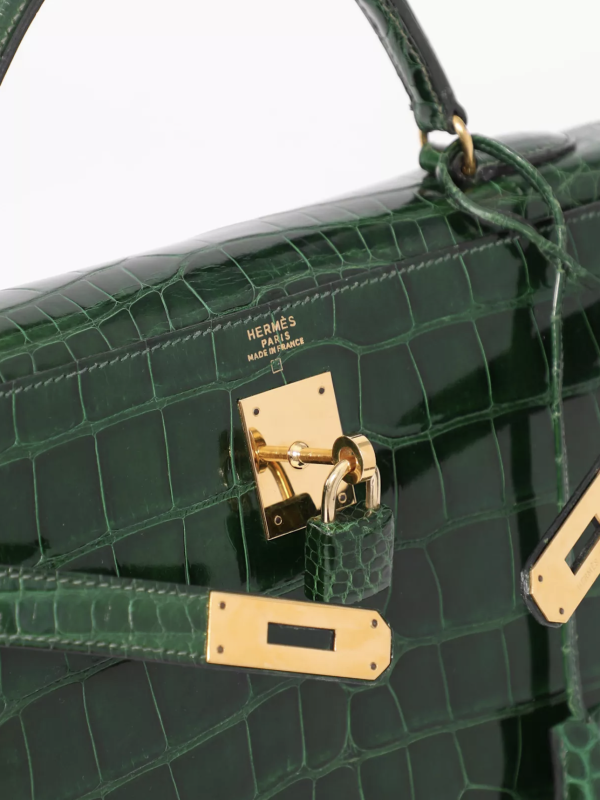
Alligator Mississippiensis
Often mistaken for crocodile, Alligator Mississippiensis can be distinguished by its poreless scales, which are larger and more uniform.
It was the first exotic leather Hermès offered in a Matte finish, prized for its subtle sophistication.
Alligator bags convey a strong yet understated elegance — a timeless symbol of craftsmanship and power.
Lizard
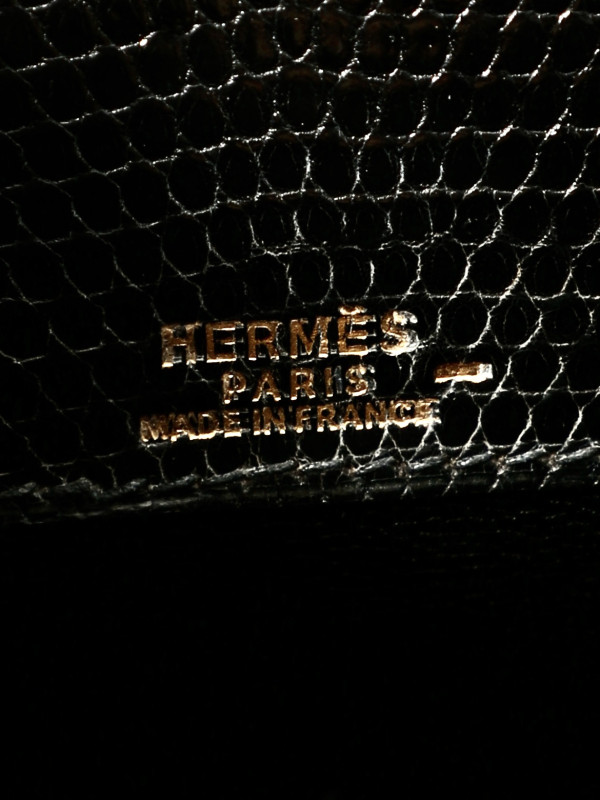
Among Hermès’s rarest exotics, Lizard skin — from the Varanus Niloticus and Varanus Salvator species — is celebrated for its fine, even scales and exceptional color depth.
Due to the smaller size of the skin, it is typically used for mini Kellys, Kelly Pochettes, and other small Sellier pieces.
Hermès distinguishes the two lizard types with specific marks: a dash (-) for Niloticus and an equals sign (=) for Salvator. Despite its durability, lizard leather remains sensitive to sunlight and should be stored carefully to preserve its glossy brilliance.
Ostrich
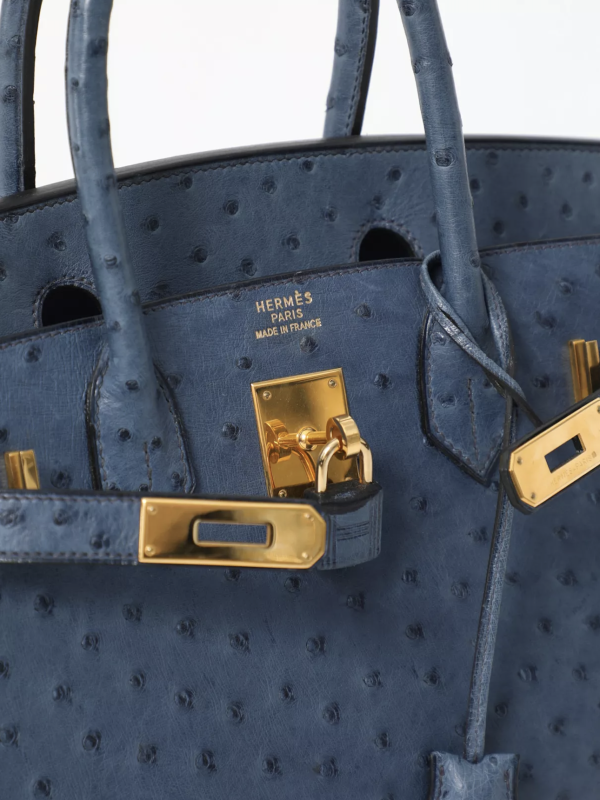
Sourced from South Africa, Ostrich leather is one of Hermès’s oldest and most enduring exotics. Its distinctive “perles” (raised follicles) make each piece unique and instantly recognizable.
Though soft to the touch, Ostrich is highly resilient and develops a rich patina with wear.
When buying an Ostrich Hermès bag, pay particular attention to the handles — they tend to darken slightly with time due to natural oils. Properly cared for, an Ostrich bag can last generations while maintaining its luxurious allure.
Caring for Your Hermès Exotic Bag
As the name “precious skins” suggests, Hermès Exotics require special care. Crocodile, Alligator, Lizard, and Ostrich are more delicate than standard leathers and must be protected from rain, creams, sunlight, and heat.
Avoid contact between light-colored exotics and darker fabrics to prevent color transfer.
When not in use, store your bag in its dust bag and box, ideally with a pillow insert, in a cool, dry, dark environment. After each wear, gently wipe it with a soft, lint-free cloth.
For long-term preservation, send it to a professional Hermès bag spa every two years. With proper care, your Exotic Hermès bag will last a lifetime — and only become more beautiful with age.
More inspiration




At ReSee, every one of our vintage pieces comes with a story. This is, in large part, thanks to our unmatched community of consignors.
Though parting with such sartorial treasures may not be easy, the exceptional personal care we put into ensuring that they will go on to live a second (or, sometimes even, a third, fourth, or fifth) life offers a thrill — one rivaled only by that of the besotted shopper who adds them to her wardrobe.
Sell with us